
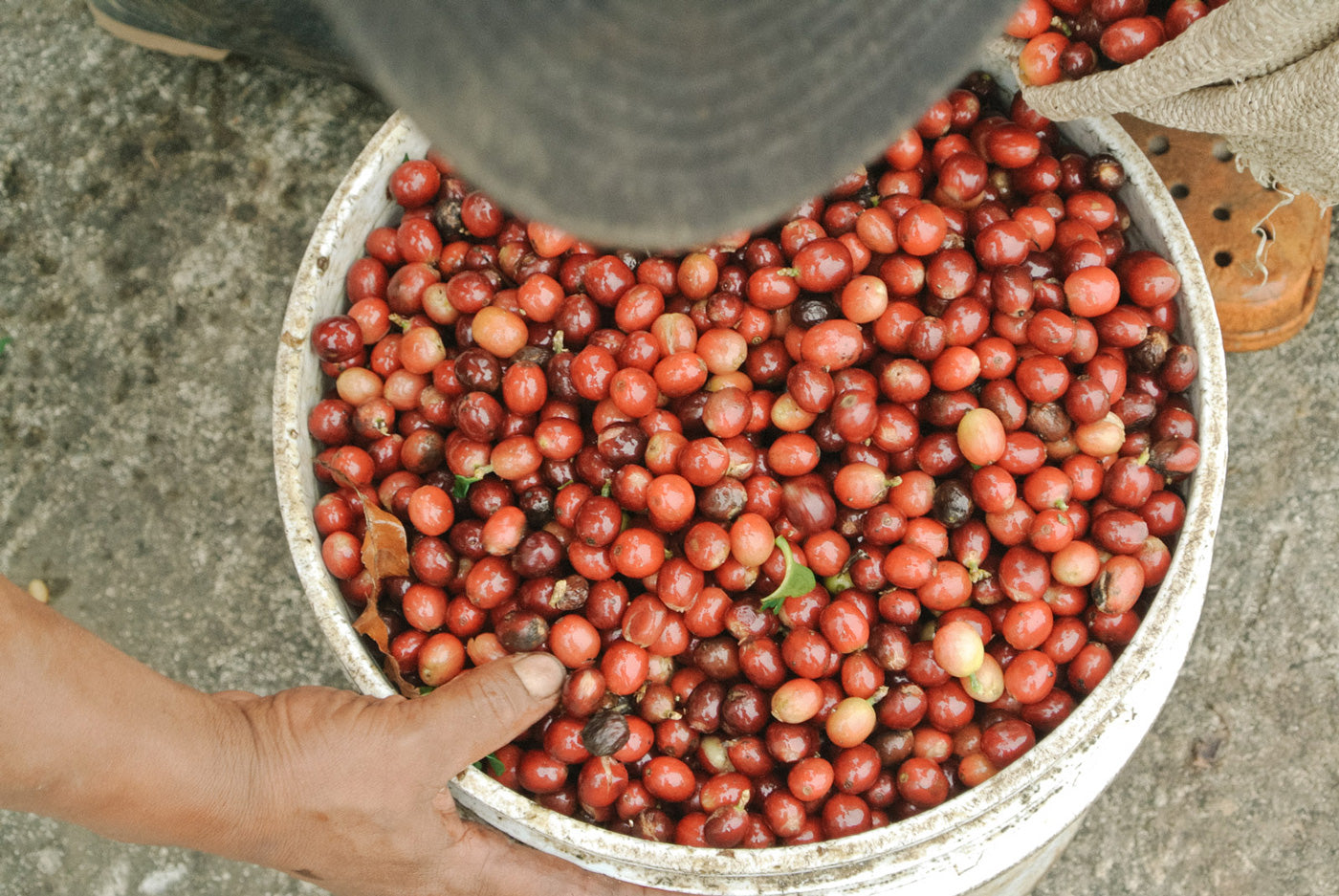
Flavor engineering in coffee: How fermentation changes the taste
What is flavor engineering in coffee processing?
Flavor engineering describes the targeted control of coffee fermentation to shape the aromas, texture, and clarity of the cup. While traditional coffee processing methods (washed, natural, honey) primarily describe the bean's journey from cherry to drying, flavor engineering utilizes controlled process steps to regulate the activity of microorganisms and enzymes. The goal is to guide the formation of esters, alcohols, acids, and other flavor precursors to create defined cup profiles—from juicy fruit to elegant sweetness.
Fermentation vs. classic processing (Washed, Natural, Honey)
All processing methods contain a fermentative component – sometimes more intense, sometimes more delicate:
- Washed : Mucilage is dissolved fermentatively after pulping, usually in water; clear, acidic cup profile.
- Natural : Fermentation throughout the whole cherry during drying; fruity, often sweeter, with a higher body.
- Honey : Part of the mucilage remains on the parchment; balanced between washed and natural.
Fermentation is the microbial transformation process within these methods. Flavor engineering intensifies the control: oxygen management (anaerobic), temperature control, pH tracking, inoculation (starter culture), and timing.
Microbiology and parameters: yeasts, bacteria, temperature, time, pH, Brix
The key players are yeasts (e.g., Saccharomyces , Pichia ) and bacteria (e.g., Lactobacillus , Acetobacter ). They metabolize sugars (measured as Brix) and produce acids, alcohols, and aroma compounds. Important factors to consider:
- Temperature : 18–25 °C promotes fruity esters; cooler ranges (4–12 °C) slow down processes for greater clarity.
- Time : From a few hours to several days; too long increases the risk of volatile acids (vinegar) or phenolic notes.
- pH : Starting point is usually 4.5–5.5; a controlled decrease stabilizes the microbiology and inhibits contamination.
- Brix : Ripe cherries often have a Brix value of 16–22°; the higher the value, the more substrate is available for fermentation.
- O2 management : Aerobic, anaerobic or carbonic ; influences which microorganisms dominate.
- Starter culture : Defined yeasts/bacteria for reproducibility – keyword: controlled fermentation of coffee .

How does fermentation change the taste?
From precursors to flavors: sugars, acids, esters, alcohols
Numerous precursors are present in the coffee cherry. During fermentation, polysaccharides, pectins, and proteins are enzymatically broken down. Yeasts produce alcohols and esters (e.g., ethyl acetate, isoamyl acetate), while lactic acid bacteria produce lactic acid and other organic acids. Together with the subsequent roasting process (Maillard, caramelization), these develop fruity, floral, or dessert-like notes, which are perceived as the fermentation profile in the cup .
Sensory effects: sweetness, acidity, body, clarity, aftertaste
- Sweetness : Often increased by the breakdown of complex sugars and the formation of esters.
- Acidity : Structured, lactic acid-forward impression; depending on the process, also more effervescent, less wine-like.
- Body : Natural and CM approaches enhance the body; cool leadership emphasizes clarity.
- Clarity : Strict O2 management and temperature control reduce "muddyness".
- Aftertaste : Longer, often fruity persistence – if control is lost, vinegar or solvent notes may appear.
Carbonic Maceration (CM)
Process steps, typical cup profiles, suitable varieties
Carbonic maceration originates from winemaking. Whole cherries are placed in a closed tank under carbon dioxide ( CO₂ ); the fermentation takes place predominantly intracellularly and microaerobically/anaerobically.
- Selection of ripe cherries (Brix check), sorting.
- Tank filled with whole cherries, rinsed with CO₂.
- Fermentation at controlled temperature, continuous monitoring (pH, Brix, pressure).
- Emptying, further fermentation if necessary, pulped, then drying.
Profile : Juicy red fruits (strawberry, cherry), tropical notes, floral hints, often with a "winey" character and a creamy body. Suitable for aromatic varieties such as Geisha, SL28, Bourbon, but also Castillo or Caturra benefit.
Advantages, risks, errors and quality control
- Advantages : Clear aroma signature, high sweetness, reproducible process.
- Risks : Over-fermentation (acetic acid), solvent/nail polish note, masks origin.
- QC tools : pH tracking (steady, moderate decline), temperature logging, tank hygiene, leak tightness, sensory intermediate samples.
- Pro tip : Shorter maceration phases for very sugary lots reduce vinegar notes.

Cryo-fermentation
Cold conditioned water, cryo-maceration, thermal shock: differences and effects
- Cold fermentation : Fermentation at low temperatures (4–12 °C). Slows down metabolism, sharpens contours, reduces volatile off-flavors.
- Cryo-maceration : Short-term freezing/partial freezing of cherries or mucilage (sometimes with dry ice) to break down cell walls and release aroma precursors – adapted from viticulture.
- Thermal shock : Hot-cold shock (e.g., hot water, then cold bath) around the pulping stage; facilitates mucilage dissolution, can improve aroma yield and clarity.
As a result, well-managed cryo-fermentation lots deliver precise fruit, polished acidity and high sweetness – a sought-after specialty coffee processing tool for modern, clean profiles.
Expected aromas and brewing recommendations ( filter and espresso )
- Aromas : Berry jam, stone fruit, citrus jelly, sometimes grape or passion fruit; less "winey" notes than in CM.
- Filter : 1:16–1:17 ratio, medium-fine grind, minimal agitation; bypass 5–10% for added clarity.
- Espresso : 1:2.2–1:2.5 ratio, 90–92 °C, gentle pre-infusion; ideal for fruity, sweet shots without excessive acidity.
Koji fermentation ( Aspergillus oryzae )
Enzymes, umami notes and food safety
Koji fermentation utilizes Aspergillus oryzae , known from sake, miso, and soy sauce. Its enzymes (amylases, proteases, pectinases) break down polysaccharides and proteins into sugars and peptides. In coffee, this results in:
- More freely available sugars : supports fruity roasted and fermented aromas.
- Umami effect : Subtle richness/meltiness, not a "savory" taste, rather creamy sweetness, sake/rice wine associations.
- Cleanliness : Hygiene inspections often show very clear cups despite high intensity.
Safety : With documented process control, A. oryzae is considered food-safe. Clean inoculation (starter culture), temperature/humidity management, residue monitoring, and transparent batch records are essential.
Comparison: Carbonic vs. Cryo vs. Koji
Which method is suitable for whom?
- Entry point : Cryo-guided processing for clear, approachable fruit and high sweetness; ideal for getting to know "controlled fermentation coffee".
- Deepening : Carbonic maceration for expressive, wine-like profiles with a wider range; requires some brewing experience.
- Purchase decision : Koji for adventurous enthusiasts who are looking for rare texture/umami and value documented safety.
Origin emphasis: Cryo (clear), Washed/Honey (balanced), CM/Koji (stronger process signature). Choose according to the desired balance between terroir and technique.
Criticism: Technology trumps heritage? Identity, transparency, competition
When process signatures dominate, the origin characteristics can recede into the background. This isn't a flaw – but a matter of perspective. Transparency helps calibrate expectations and ensure fair competition.
Labeling, traceability and competition rules
- Labeling : Clear names (e.g. “Anaerobic CM, 36 h, 12 °C, pH-Track”) and mention of starter cultures.
- Traceability : Farm, lot, harvest year, process parameters, QC protocols – ideal as QR/datasheet.
- Competitions : Separate categories for comparing fermentation methods promote fairness between terroir- and process-oriented coffees.

Seasonality and purchasing: release cycles, harvest windows, pricing
Fermentation lots often appear in small batches, sometimes later than conventional lots, because additional processing and drying times are required. Prices are higher due to the increased effort, risk, and selective sorting. Plan seasonally.
- Harvest window : Central America (Q1–Q2), East Africa (Q2–Q3), South America (Q3–Q4), Asia-Pacific varies.
- Release cycles : 2–6 months after harvest; Koji and CM lots may drop later.
- Storage : Hermetic bags, cool, dry storage conditions, rapid roasting preserves freshness and complexity.
Checklist for buying fermented specialty coffees
- Process details: Method, time, temperature, pH/Brix tracking, anaerobic/CM/cryo/koji.
- Origin and variety: region, farm, lot size, variety mix.
- Safety and hygiene information: especially for koji (inoculum, residue-free).
- Roasting style recommendation: Filter/Omni/Espresso, development time, Agtron.
- Sensory notes: Primary aromas, acidity, body, aftertaste.
- Samples and feedback: Sample cupping , brew guide, exchange with roasters.
Brew setup: Recipes that highlight fermentation notes
Filter (V60/Origami) : Grind size, ratio, agitation, bypass
- Ratio : 15–17 g coffee to 250 g water (1:15–1:16.7) depending on the density of the roasted coffee.
- Grind size : Rather medium-fine for CM/Koji, medium for cryo – Target: TDS 1.35–1.45% in a clear cup.
- Agitation : Gently (1–2 swirls) after infusion; avoids over-extraction of bitter polyphenols.
- Bypass : 5–15% clear, hot bypass for sharp contours in heavy-bodied fermentations.
- Water : 60–80 ppm hardness, 20–40 ppm alkalinity – supports fruit and acid structure.
- Bloom : 45 s at 2.5–3× total coffee quantity; efficiently degasses CM lots.
Espresso: flow profiles, temperature, ratio
- Pre-infusion : 3–6 s at 2–3 bar; reduces channeling in more porous beans.
- Temperature : 90–92 °C for cryo/koji; 91–93 °C for CM depending on roast density.
- Ratio : 1:2.2–1:2.6; longer ratio for sticky, fruity CM shots.
- Flow : Gentle ramp-up, no aggressive decline; retains sweetness and juiciness.
- Milk drinks : CM is suitable for fruity flat whites; Koji brings a creamy melt, Kryo delivers clear fruit in cappuccino.
Glossary: From anaerobic to starter culture
- Anaerobic fermentation of coffee : Fermentation without oxygen, often in sealed tanks.
- Brix : A measure of sugar content in cherry juice.
- Carbonic : Fermentation in a CO₂ atmosphere with the entire fruit tissue.
- Koji : Culture of Aspergillus oryzae for enzymatic breakdown.
- Cryo : Cold-controlled or freeze-assisted maceration/fermentation.
- pH : Measure of acidity; controls microbial balance.
- Coffee starter culture : Defined yeast/bacteria cultures for targeted inoculation.
Further steps: Try side-by-side cuppings (washed vs. CM/cryo/koji), document brew parameters, and compare your impressions. Recommended reading: scientific reviews on fermentation-controlled brewing methods and sensory analysis in the specialty beer sector.