Espresso preparation of the future: Eversys , AI and barista-level quality from the fully automatic machine
Anyone who loves specialty coffee knows the dilemma: maximum quality, like from a precisely calibrated portafilter machine – but consistently reproducible, fast, and without daily adjustments. Modern fully automatic coffee machines from Eversys bridge this gap. They combine sensors, automatic calibration, and digital control to predictably extract outstanding espressos from beans. This article explains why the future starts now, the current state of the technology, and what you should consider when buying one.
Why the future starts now: Trends in espresso preparation
Espresso machines are becoming data-driven. Instead of relying solely on feel, measurements and software now determine the quality. In the cup. Cafés, offices, and restaurants demand speed and consistency, while expectations for specialty coffee quality are rising. This is precisely where smart systems come in: They translate barista knowledge into reproducible workflows – from grind size to flow profile.
From analog rituals to data-driven extraction
The classic ritual – checking the beans, fine-tuning the grinder, tamping, observing the extraction – remains fascinating, but is prone to errors and labor-intensive. Data helps to stabilize variables and optimize extraction.
- Sensors detect flow rate, pressure, temperature and time with high precision.
- Algorithms balance dose, grind size and brewing pressure against target values.
- TDS (Total Dissolved Solids) and extraction time serve as control parameters for flavor clarity and body.
- Telemetry for coffee machines: Devices provide status data for maintenance and quality assurance .
- Remote control of coffee machine: Recipes are rolled out centrally, changes are logged.

Eversys in focus: What makes the fully automatic machines so special
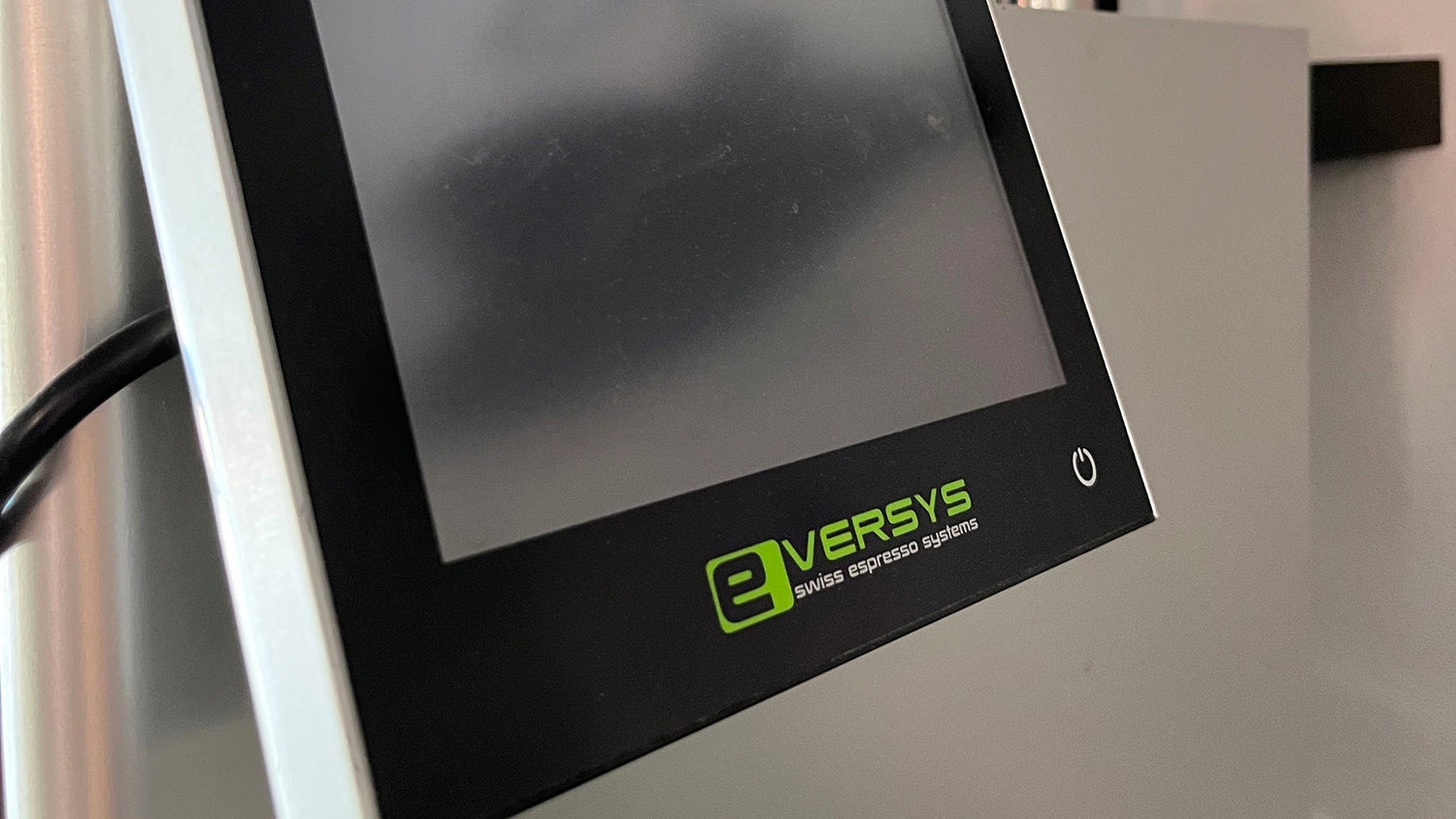
Eversys has redefined the concept of a fully automatic coffee machine : instead of convenience-first, in-cup quality is the focus. The goal is a barista-level fully automatic machine – meaning espressos that can hold their own in blind taste tests against high-end portafilter setups.
Sensors and automatic calibration ( grind size , quantity, pressure)
Automatic calibration is the core component. Typical components:
- Precision mills with sensors for dose and particle output that adaptively adjust the grind size depending on the bean, humidity and aging.
- Weight- or volume-based control (time-to-target, ratio control) for consistent doppios – regardless of bean batch and daily form.
- Stable brewing pressure and temperature with fast regulation; pre-infusion for even wetting.
- Auto-tuning: The system corrects deviations – for example, if the extraction time drifts or the flow drops.
Result: An espresso machine that not only repeats shots, but actively steers them into the target range without anyone having to turn the grinder.
Remote control, telemetry and fleet management
For businesses with multiple locations, centralized control is invaluable. Eversys platforms offer:
- Remote updates for recipes, reference profiles and UI – including role and rights management.
- Telemetry: utilization, cleaning cycles, consumption history, error codes; helpful alerts before failures.
- Fleet management: location comparison, benchmarking, automatic reports for quality and costs.
This reduces service calls and keeps the cup consistent across all devices – a plus for brands with a defined taste profile.
In-cup quality vs. portafilter : Blind tests and measurements
In comparative blind tests, Eversys fully automatic coffee machines often come surprisingly close to high-quality portafilter machines. Key indicators:
- TDS espresso and extraction time are close to the target, shot-to-shot variation is low.
- Texture and sweet spot: Consistent pre-infusion and flow control result in sweet, clear cups with a clean finish.
- Compromises: Extreme profiles (e.g., long, complex pressure ramps) of a high-end portafilter can sometimes be approximated, but not always replicated 1:1.
For the vast majority of specialty profiles, however, in-cup quality remains stable at a level that allows for a rethink of " portafilter vs. fully automatic".

AI-controlled espresso extraction: status quo and outlook
AI-powered coffee machines sound like something from the future, but they are already in productive use: models learn from sensor data, derive correlations between bean parameters and cup result, and suggest adjustments – sometimes fully automatically, sometimes by approval.
Today, this is especially valuable when teams change, branches expand, or beans rotate seasonally. Tomorrow, AI will optimize even more precisely for target flavor – with feedback from sensors, inventory data, and even guest notes.
Adaptive prescriptions, pressure/flow profiling, and self-learning
- Adaptive recipes: Grind size , dose and ratio adjust to moisture, bean age and production pressure.
- Flow Profiling: The machine does not rigidly maintain the pressure, but controls the flow rate – for reproducible extraction even with slight puck variations.
- Self-learning: The system evaluates deviations (e.g., excessively fast references) and gently adjusts the parameters until target values are stably achieved.
This is how AI-controlled espresso extraction transforms from a buzzword into a practical quality assurance in everyday life.
Application scenarios: Café, office, catering and convenience stores
Where does an Eversys fully automatic coffee machine demonstrate its strengths?
- High-traffic café: Consistent shots during peak hours, reduced bar latency, staff can concentrate on guest interaction and latte art.
- Office: Specialty quality at the touch of a button, minimal training, predictable operating costs.
- Food service/hospitality: Reliable in-cup quality across shifts; telemetry and remote control for branch standards.
- Convenience/To-Go: High throughput, integrated cleaning, consistent quality with minimal staff.
For ambitious home users, size is often the limiting factor. In professional environments, however, the benefits are clearly measurable.
Comparison: Eversys vs. modern portafilter workflows
The question of "portafilter vs. fully automatic " is less a matter of belief than a question of use case. Modern portafilter machines with scales, single-dose grinders, and profiling are fascinating – but they require know-how and time. Fully automatic machines standardize the result and reduce variation.
Throughput, consistency, personnel costs and TCO
- Throughput: Fully automatic machines deliver quickly and in parallel – ideal for rush hours; portafilter machines are limited by manual steps when making complex drinks.
- Consistency: Automatic calibration minimizes effects of daily form; with portafilter machines, consistency depends heavily on routine and experience.
- Personnel costs: Less training effort, shorter onboarding times, lower error rates.
- TCO (Total Cost of Ownership): Higher initial purchase price, but predictable maintenance and less waste; with portafilter machines, variable training, time expenditure and waste have a greater impact.
- Range of tastes: Portafilter machines score points with experimental profiles; fully automatic machines deliver a higher minimum quality across the board.

Buyer's guide and roadmap 2026: what to look out for?
Those investing today should also consider the coming years. Open interfaces, modular upgrades, and service quality are crucial. Eversys positions itself accordingly with continuous software improvements and robust hardware design.
In practical terms: Test your beans on the target system, evaluate the workflow and cleaning routine, and check the integration into your existing IT.
Checklist: Service, upgrades, sustainability and integration
- Service partner: Response times, spare parts availability, remote diagnostics.
- Software and upgrades: Recipe management, user rights, OTA updates, migration paths until 2026.
- Quality assurance : Monitoring of TDS/Flow/Time, automatic reports, audit logs.
- Cleaning and hygiene: Automated cycles, consumables, downtime.
- Sustainability : Energy profiles, standby optimization, longevity of mills and brewing unit.
- Integration: API/Standards (e.g. MQTT/REST), POS/CRM/Telemetry connectivity, fleet management.
- Training: Micro-trainings, digital guides, error prevention.
- Sample cups: Blind tasting against your current setup; measure extraction time and dispersion, taste with team and regular customers.
Next steps: Compare two to three machines with your beans in a side-by-side view. Document the recipe, shot times, and feedback. Read on about flow profiling, sensor-based quality control , and the fundamentals of extraction to make informed decisions.