
Collection: Project Coffees

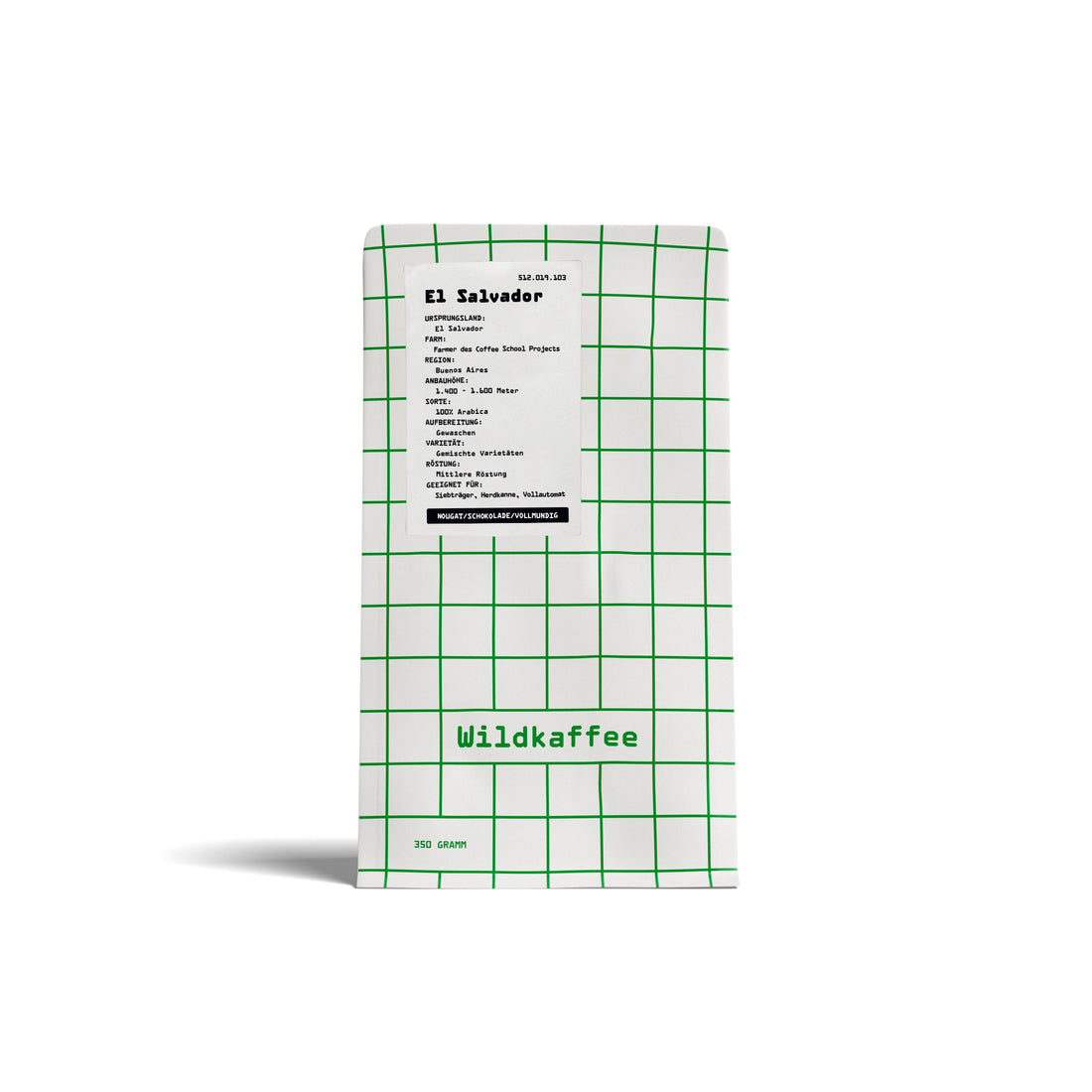
Our project coffees stand for fair trade, direct partnerships, and sustainable cultivation – from the plantation to your cup. Currently in our assortment: coffees from El Salvador from the Coffee School Project in Buenos Aires. Each pack supports concrete work on-site and fair wages for the farmers.

Sort by
Sort
Sort

1 product

1 product

  • El Salvador - Coffee School Project
    El Salvador - Coffee School Project
    Vendor:
    El Salvador - Coffee School Project
    Regular price
    €13,50 EUR €35,90 EUR
    Regular price
    Sale price
    €13,50 EUR €35,90 EUR
    Unit price
    €38,57 EUR  per  kg
    back in stock!

Our quality standards

Project Coffee from El Salvador - the Wildkaffee Coffee School Project

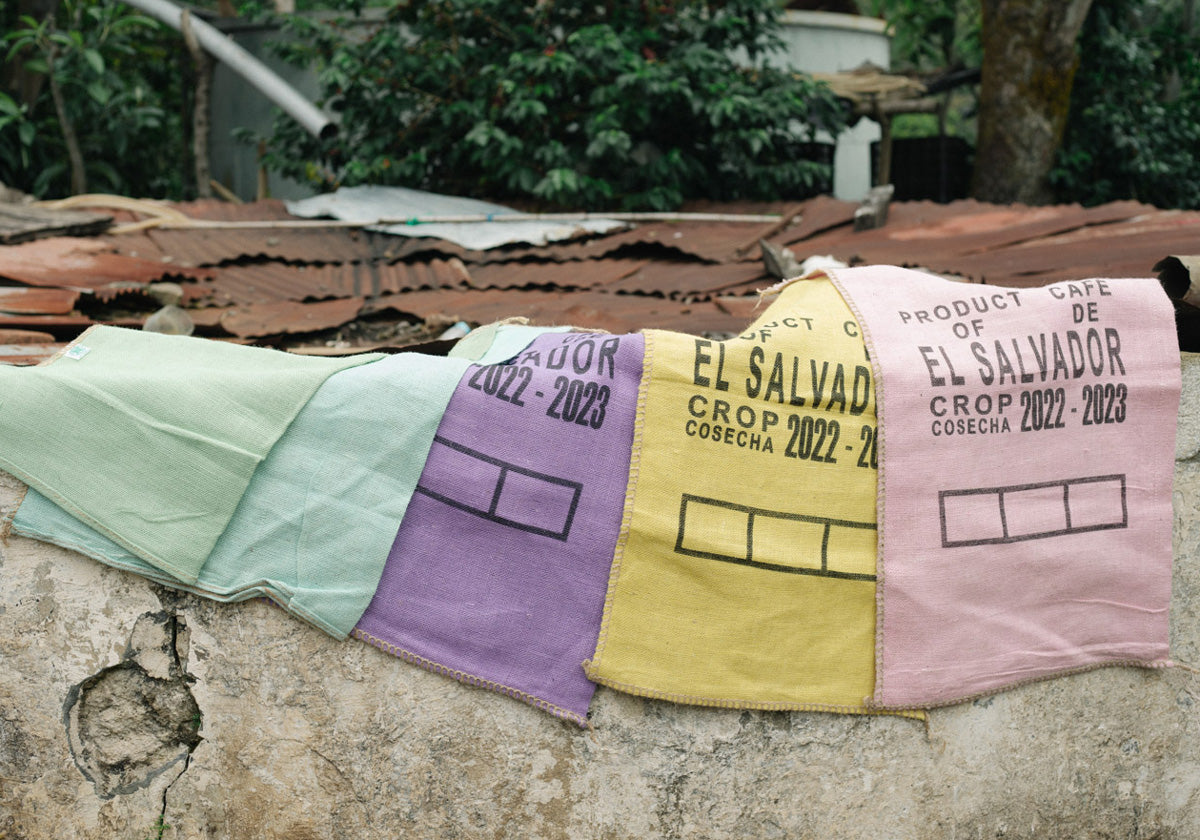
Let's start with our pilot project - the Coffee School Project, which we launched in Buenos Aires, El Salvador in 2022. Together with farmer and coffee producer Rodolfo Ruffatti Batlle, we want to restore the former specialty coffee stronghold of El Salvador to its former greatness.

The region has ideal conditions for growing specialty coffee, but the trade and cultivation of coffee has almost completely come to a standstill in recent years. Dubious coffee traders, leaf rust and the high crime rate were reasons why almost all farmers turned away from growing coffee.

This has resulted in numerous abandoned coffee plantations, even though the soil, climate and nature are ideal for growing the best specialty coffees. With the Coffee School Project and the new project coffees, we are addressing these problems. With targeted training on more productive cultivation, new varieties, new techniques, organic farming as well as harvesting and processing, we want to give local farmers new perspectives.

For this purpose, we have bought our own plantation, where the surrounding farmers are trained. At a central processing station, also known as a mill, we also support the farmers with processing and preparation for export. To date, we have reactivated several hectares of the former plantations together with the farmers.

Project coffee from Rwanda - the Community Coffee Rwanda Project

Another sustainable coffee project is the Community Coffee Rwanda Project (CCR). Specialty coffee from Rwanda is among the most exciting coffees in East Africa. At the same time, many smallholder farmers face great challenges: Numerous older farmers, due to age, could no longer maintain the intensive care of their coffee plants over the years to the extent necessary for the production of high-quality specialty coffees.

Additionally, the conditions for further processing—that is, the preparation of the coffee for export—were often not ideal in many places. Eric Wright, an American, recognized these very problems and founded the Community Coffee Rwanda cooperative in 2017. He initially leased a washing station and then invested in an area where coffee had not previously been cultivated.

Initially, many locals met him with skepticism. However, Eric was not deterred and leased a second washing station. These centrally located processing stations allow surrounding smallholder farmers to have their coffee professionally processed and, at the same time, benefit from Eric's many years of experience in growing and processing specialty coffee.

The farmers often lacked not the motivation, but primarily the financial means and the knowledge of modern cultivation and care methods for high-quality specialty coffee from Rwanda. Today, Eric places a special focus on organic farming and the sustainable development of the cooperative.

Meanwhile, the original project has grown into a continuously expanding community, which today includes more than 800 farmers and managers, thereby making an important contribution to the long-term development of sustainable coffee cultivation in Rwanda.

How does purchasing a project coffee support the coffee project in the country of origin?

With every pack of Wildkaffee Project Coffee, you directly support the respective coffee project in the country of origin. But how exactly does this work?

In the past, it was common in many growing regions for farmers to sell their coffee only at stock exchange prices through intermediaries or at export ports. This often left producers with only a very small share of the actual added value.

Through our Project Coffees and direct trade with roasters, we support farmers not only with export but also with pricing and marketing their coffees. The goal is for a significantly larger portion of the sales price to remain with the producers. This enables fair wages, greater planning security, and a noticeable improvement in the quality of life on site.

Another portion of the revenue goes directly to the respective projects. This supports training, new cultivation methods, sustainable processing techniques, organic farming, and the further development of infrastructure. In the long term, this creates more knowledge, greater independence, and better future prospects for the participating farmers.

Our goal is a close and transparent connection between farmer and roaster, from which both sides benefit: producers receive fair payment and long-term perspectives, while we gain access to exceptional Specialty Coffee quality. This very partnership-based cooperation is what defines our Project Coffees.

Motivation and the concrete help behind our project coffees

A sustainable future in which all farmers have equal opportunities and possibilities is particularly important to us. We have seen a lot on our annual coffee trips to the countries of origin. Unfortunately, we have also seen a lot of negative things, including poor treatment of the surrounding nature, catastrophic working conditions, poor wages and child labor.

All of these aspects urgently need to be improved. As a roasting company that has been cultivating social and sustainable principles for years, we are therefore obliged to take up these aspects and do everything we can to change them permanently. We also hope that the coffee projects will serve as a model for other plantations and cooperatives, so that sustainable and social coffee becomes established step by step.

But what does the help actually look like? How does a project like this work? First of all, we had to appoint a project manager for our project in El Salvador, because as a roastery we have to and want to focus on operations in Germany and cannot be there in person on a permanent basis. Thanks to the long-standing friendly relationship with the Salvadoran farmer and coffee producer Rodolfo Ruffatti Batlle, we were able to recruit a manager for the Coffee School Project who is extremely knowledgeable about the topics surrounding organic farming and is also aware of the problems in the Buenos Aires region.

Then we started looking for a central plantation where we could provide the farmers with the best possible training. There is also a processing station directly connected to it, where the coffee is processed and prepared for export. New methods are also tried out there and biological crop protection products are produced using microorganisms. The farmers can experience all of these processes first hand and thus prepare themselves optimally for an independent future.

As a big bonus, the farmers also get stable trading partners from the western world who import the coffee at a fair price. This creates a new, fair system from which the entire region benefits.