
What do the processing methods washed, natural, honey, anaerobic mean?
Why processing influences taste more than many think
Coffee processing methods – i.e., how the cherry is processed after harvest – often shape the flavor profile more strongly than varietal or roast level. Fermentation, drying, and residual fruit contact significantly influence sweetness, clarity, texture, and fruit intensity.
Brief definitions: washed, natural, honey, anaerobic (with flavor profiles)
- Washed: Clean, clear profile; crisp acidity, floral/terroir-driven notes.
- Natural (dry): Sweet, fruity to jam-like; sometimes winey, softer acidity.
- Honey (pulped natural): Between washed and natural; velvety sweetness, moderate fruit.
- Anaerobic: Intensely fruity, exotic; from elegant to "boozy" depending on control.
Washed: process, typical sensory profile, common countries of origin
Pulp is mechanically removed, beans are washed, then dried. Sensory profile: high clarity, defined acidity, tea and citrus notes. Common: Colombia, Peru, Kenya, Ethiopia (highlands), Costa Rica.
Natural (dry): process, typical sensory profile, common countries of origin
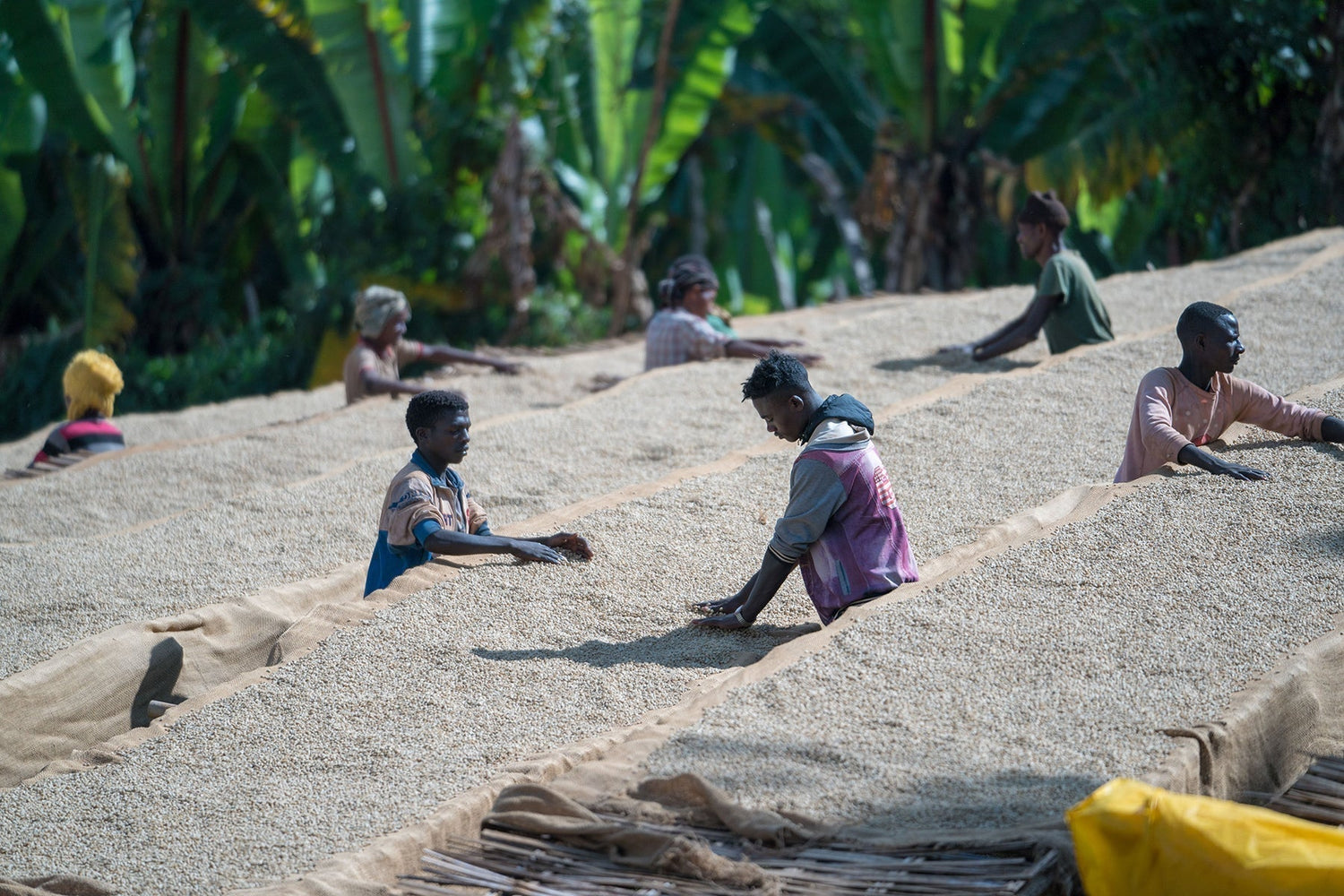
Whole cherries dry on patios or beds; the bean absorbs fruit components. Sensory profile: berries, stone fruit, chocolate; softer body. Common: Ethiopia, Brazil, Yemen.
Honey (pulped natural): process, Honey-Grade (yellow/red/black), typical sensory profile
Skin removed, mucilage partially remains. Grades: Yellow (little mucilage, lighter), Red (medium), Black (much, long drying). Sensory profile: honey sweetness, dried fruits, balanced acidity.
Anaerobically fermented: variants (anaerobic natural/washed/honey), opportunities & risks
Fermentation in tanks without oxygen, implementable as Natural/Washed/Honey. Opportunities: precise fruit development, high sweetness. Risks: over-fermentation, alcoholic notes, inconsistency with poor hygiene.
Direct comparison: Which method is suitable for filter, espresso, and milk drinks?
- Filter: Washed for clarity; Honey for sweetness; elegant anaerobic lots for complexity.
- Espresso neat: Honey and Natural for body/sweetness; light Washed for lively shots.
- With milk: Natural/Honey (chocolate, berry); gentle anaerobic for tropical notes.
How to identify processing on the coffee package (terms, seals, transparency notes)
- Terms: "washed/fully washed", "natural/dry process", "honey/pulped natural", "anaerobic".
- Transparency: lot/farm names, drying method, fermentation duration, water activity.
- Tasting Notes as an indicator: "clean, crisp" (washed), "jammy, berry" (natural), "tropical/boozy" (anaerobic).
Buying and brewing guide: What to look for with sweet-fruity vs. clear profiles
- Sweet-fruity (Natural/Honey/anaerobic): grind slightly coarser, higher brew ratio, 92–94 °C, gentle stirring.
- Clear-precise (Washed): grind finer, 1:16–1:17, 92–96 °C, even, pulsating pours.
- For specialty coffee processing, comparing several roasts from the same farm is worthwhile.
FAQ & Quick-Tips: Storage, grind size, brewing parameters depending on processing
- Storage: cool, dark, airtight; bag with valve, whole bean.
- Grind size: Natural/Honey slightly coarser for clarity; Washed slightly finer for sweetness/balance.
- Espresso: Natural/Honey lower pressure start (preinfusion), Washed slightly longer ratio (1:2.2–1:2.4).
What is the difference between washed, natural, honey, and anaerobic?
Washed: Pulp mechanically removed, beans washed and dried. Clean, clear profile, origin aromas emerge. Natural: Cherries dried whole. Bean absorbs fruit aromas – sweet, fruity, sometimes winey. Honey: Pulp removed, but mucilage remains. Between washed and natural. Anaerobic: Cherries ferment in airtight tanks – fruity sweetness, exotic aromas.
Are anaerobically fermented coffees always better or higher quality?
No. Anaerobic primarily describes the fermentation environment (without oxygen), not automatically the quality. Good lots are very clean and complex; weaker lots can quickly appear over-fermented, alcoholic, or unbalanced.
How do I identify the processing on the package if it is not clearly stated?
Look for terms like "washed/fully washed", "natural/dry process", "honey/pulped natural", or "anaerobic". Tasting notes can also provide clues: "clean, crisp" often indicates washed, "jammy, berry, winey" more often natural; "tropical, boozy, candy" can indicate anaerobic fermentation.
Further reading: Compare "washed vs natural" from the same farm, read SCA resources on fermentation, or try cuppings to experience coffee processing explained in the cup.