
Auction Lot Coffee: What it is, where auctions take place, and who buys the top lots.
Overview: What is Auction Lot Coffee?
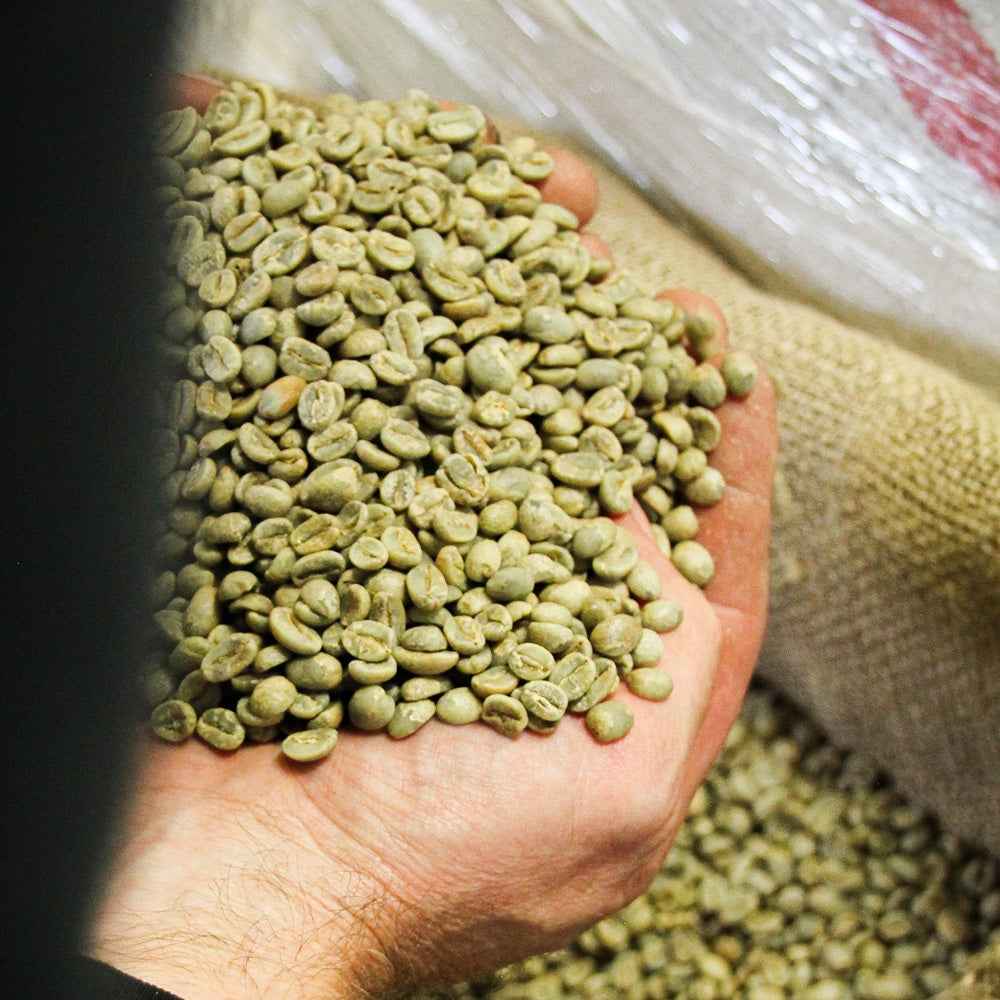
Auction Lot Coffee refers to green coffees that are auctioned as individual lots in a public coffee auction . These lots are typically very carefully selected micro- or nanolots with high cupping scores, clear origin, and complete traceability. Auctions create transparency: producers, juries, and bidders see the same evaluation data, and the final hammer price reflects the specific market demand. This is exciting for specialty coffee enthusiasts because it's where the most innovative processing methods, rare varieties, and exceptional flavor profiles first become visible. At the same time, auctions are learning environments: they showcase the quality currently celebrated in the industry—from Geisha coffee from Panama to experimentally fermented lots from Colombia or Ethiopia. In short, Auction Lot Coffee is the stage for top quality, limited quantities, and maximum visibility.
Explanation of terms: Solder, Microlot, Nanolot and Scoring
A lot is a defined quantity of green coffee with homogeneous quality, identical origin, and common processing. Microlots (often 5–30 bags) are produced from selective parcels, varieties, or processing steps; nanolots are even smaller, often just single bags, especially for extremely rare varieties or competition productions. Evaluation is carried out using the SCA protocol: aroma, acidity , sweetness, body, finish, and balance determine the score. Lots scoring around 86 points become interesting at auctions; 88+ is more typical for top positions, while absolute top scores (90+) make international headlines.
Creation of an auction lot: Selection, preparation, cupping
An auction lot begins with the targeted harvesting and selection of ripe cherries. This is followed by controlled processing – classic methods such as washed or natural, or experimental (anaerobic, carbonic maceration). Each batch is dried, stored, and documented separately. Preliminary cuppings determine which samples make it to the national or private finals. Independent juries (national and international) assess suitability, calibrate flavor descriptions, and confirm the scores. Only then do the lots, with clear traceability, proceed to the coffee auction.
Which green coffees are traded at auctions?
Auctions showcase the qualities that drive the specialty coffee scene : rare varieties, meticulous processing, sparkling aromas, and minimal defects. They are highly sought after because they provide flagship profiles for roasters and perform well in competitions (e.g., Barista Championships).

Varieties and origin: Geisha, Sidra, SL28; Panama, Ethiopia, Colombia
The variety determines the structure and aroma – and influences the price. Prime examples:
- Geisha : floral intensity, jasmine, bergamot, high sweetness – often legendary as Panama Geisha on Best of Panama .
- Sidra: A crossbreed with an elegant fruit profile, popular in Colombia.
- SL28/SL34: Kenyan classics with lively acidity , cassis and citrus.
Origin also plays a role: Panama for ultra-high scores; Ethiopia (home of genetic diversity); Colombia with its process innovation; plus Kenya, Costa Rica, El Salvador, and increasingly Rwanda, Burundi, or Indonesia. Each region brings its own seasonal windows and terroir characteristics.
Preparation methods: washed, natural, anaerobic, carbonic maceration
Process selection is a key lever for aromatics:
- Washed: Clarity, defined acidity , high transparency of the terroir.
- Natural: Ripe fruit, intense body, some wine-like notes.
- Anaerobic: Oxygen-free fermentation, often high sweetness, complex esters – anaerobic processing is a driver for competitive cups.
- Carbonic Maceration (CM): CO₂-assisted fermentation, precise, often with expressive, clean fruit notes.
Experimental variants (e.g., Koji, Yeast-Inoculation) are increasingly appearing in specialty coffee auctions , provided that the sensory evaluation is clean, repeatable, and transparently documented.
Quality metrics: SCA Score, Cup Notes, Defects, Lot Size
What bidders should pay attention to:
- SCA score : 86–88 good, 88–90 very good, 90+ exception.
- Cup Notes: clear, repeatable, differentiated; no dominant off-flavors.
- Defect rate: very low, calibrated via Green Grading.
- Lot size: from 10–30 kg (nanolots) to 300–600 kg (microlots) – relevant for roasting planning.
- Traceability : Farm, plot, variety, process, harvest date and drying documented.
Where do coffee auctions take place?
Auctions take the form of national competitions, private farm auctions, and digital marketplaces. The most well-known entry points for auction lots of coffee are:
Cup of Excellence by country and date
The Cup of Excellence (CoE) is one of the most prestigious platforms. The Alliance for Coffee Excellence, or ACE for short, organizes annual competitions in several countries of origin, such as Ethiopia, Colombia, Honduras, Guatemala, Nicaragua, Costa Rica, Peru, El Salvador, and Rwanda. National pre-qualifications, an international jury, a final auction—and full transparency regarding scores, cup notes, and lot data. The competitions typically take place a few weeks to months after the harvest; bidders register through ACE and receive access to rules, catalogs, and sample kits.
Best of Panama and Farm-Private Auctions
Best of Panama (BoP) sets the standard for Geisha coffee . The BoP auction is known for record prices and shapes the global perception of Panama as a coffee origin. In addition, there are private auctions held by individual farms or producer groups ( private coffee auctions ) – for example, for rare plots, special fermentations , or competition lots. Advantages: Short lines of communication between producers and buyers, sometimes exclusivity; disadvantages: Access is selective and requires prior contact.

Digital auction platforms and access
Besides ACE and BoP, there are digital platforms that allow international bidders, often with a regional focus and clear compliance rules. Access steps:
- Create an account, verify company data, clarify payment limits.
- Sample request for selected lots; please allow for shipping costs and time.
- Test the technical bidding interface (proxy bids, max bid, time extension).
- Check the terms and conditions regarding shipping, warranty, dispute resolution and coffee logistics import .
Who buys the top lots? Markets, trends and examples
The buyer landscape is global and diverse. However, recurring patterns emerge with top-tier lots – both among roasters and retailer consortia, as well as competing baristas.
Buyer markets: UAE, China, South Korea, Japan, Europe, USA
A dynamic UAE coffee market has established itself in the United Arab Emirates, uniting flagship cafés, competition teams, and roasters with a strong media presence. China is experiencing rapidly growing demand for specialty coffee , particularly in metropolitan areas with a third-wave focus . South Korea and Japan are considered quality-driven and detail-oriented, with a high willingness to pay for precise profiles. Europe (including Scandinavia and the DACH region) and the USA remain core markets: Many top roasters use auctions to curate signature releases or compete in championships. Lots are often shared in bidding consortia across national borders.
Price factors: rarity, storytelling, competition, media impact
Why do some lots fetch record prices?
- Rarity: limited variety, tiny lot size, exceptional farm plot.
- Storytelling: clear producer story, sustainable practice, documented process innovation.
- Competition: Barista stages and social media boost demand at harvest time.
- Media impact: press scanners, rankings, "first release" in major markets.
- Cost structure: Premium selection, extended drying, low-risk packaging (GrainPro, vacuum-packed), transport.
Seasonal calendar: Harvest window and auction timing
Timing is crucial because harvest windows, processing, and shipping determine availability. A rough seasonal coffee calendar helps with planning and budgeting.

Central America, South America, East Africa, Asia-Pacific throughout the year
- Central America (harvest in November–March, auctions in spring/summer): Costa Rica, Guatemala, Honduras, El Salvador, Panama (BoP usually in early summer).
- South America (May–Sept harvest, late autumn/winter auctions): Colombia has multiple harvest windows per region; Peru and Brazil follow later.
- East Africa (Oct-Jan harvest, spring/summer auctions): Ethiopia, Kenya, Rwanda, Burundi – with sometimes long export lead times.
- Asia-Pacific (variable): Indonesia, Papua New Guinea, Taiwan (small quantities, specialties).
Between harvest and auction lie drying, sorting, pre-shipment testing, and sample shipping. Those wishing to bid should plan for a lead time of 6–12 weeks to test roasting profiles and secure their budgets.
Logistics after the contract award: Export, import, customs, roasting planning
After the contract is awarded, the operational phase begins:
- Export: Documents (Invoice, Packing List, CoO, Phytosanitary if applicable), appropriate packaging (GrainPro/Vacuum), palletizing.
- Transport: Air freight for nanolots/competition, sea freight for larger microlots; temperature control must be observed.
- Import and customs: EORI, customs tariff number, import VAT; freight forwarder for handling, if applicable.
- Quality check: Incoming cupping against auction sample; clarify complaint window.
- Roasting planning: Small batch setup, profile development, communication (cup notes, SCA score, coffee traceability ).
Further steps: Monitor auction calendars (CoE, BoP), try sample sets, document your cuppings , and build networks with producers or platforms. This will increase your expertise – and your chances of finding the right lot at the right time.