
What does Fair Trade mean?
Fair Trade is a well-known, certified system with strict guidelines. Its goal is to guarantee smallholder farmers fair prices, social security, and minimum environmental standards. This applies not only to coffee farmers; Fair Trade also exists for many other producers of natural products.
However, the question is much more likely to be why something like Fair Trade is needed. Unfortunately, this is because coffee is still a commodity traded on the stock exchange. This leads to speculation and often also to dumping prices. Coffee is therefore unfortunately still grown in many places for quantity rather than quality. And this has negative consequences, especially for the producers and workers on the coffee plantations: in parts of the global coffee sector, challenges such as low producer prices, problematic working conditions, and environmental impacts continue to exist. Fair Trade has been addressing this since the 1970s.
Core Principles of Fair Trade
- Minimum price for raw coffee (even when world market prices fall)
- Premiums for social projects in the community
- Cooperative structure as a prerequisite
- Ban on child labor & promotion of environmentally friendly farming methods
Advantages

- Reliable security for coffee farmers
- Transparent standards and external controls
- Globally recognized seal (e.g., Fairtrade International)
Criticisms
- Complex and costly certification
- Not all farmers (e.g., single-owner farms) can participate
- Fixed standards can offer little flexibility
Disadvantages of Fair Trade
One thing about Fair Trade is that it is quite opaque. In addition to the normal seal, there are 7 other seals that come from Fair Trade. The fair-trade ingredients contained also vary, which is difficult for consumers to see despite the different seal.
Unfortunately, farmers also use the exact system and pricing of Fairtrade to sell cheaper, slightly lower-quality coffee with the Fairtrade premium, while the higher-quality coffee is sold on the free market. It is not at all unlikely that this lower-quality coffee then ends up in German supermarkets.
And the biggest problem with Fair Trade is certification. Every coffee farmer who wants to sell Fair Trade coffee must be certified. The application fee alone is €525, followed by the initial certification for €2,300. These fees are then charged annually. These sums, especially for coffee farmers in emerging countries, are a considerable amount of money and often unaffordable.
What is Direct Trade?
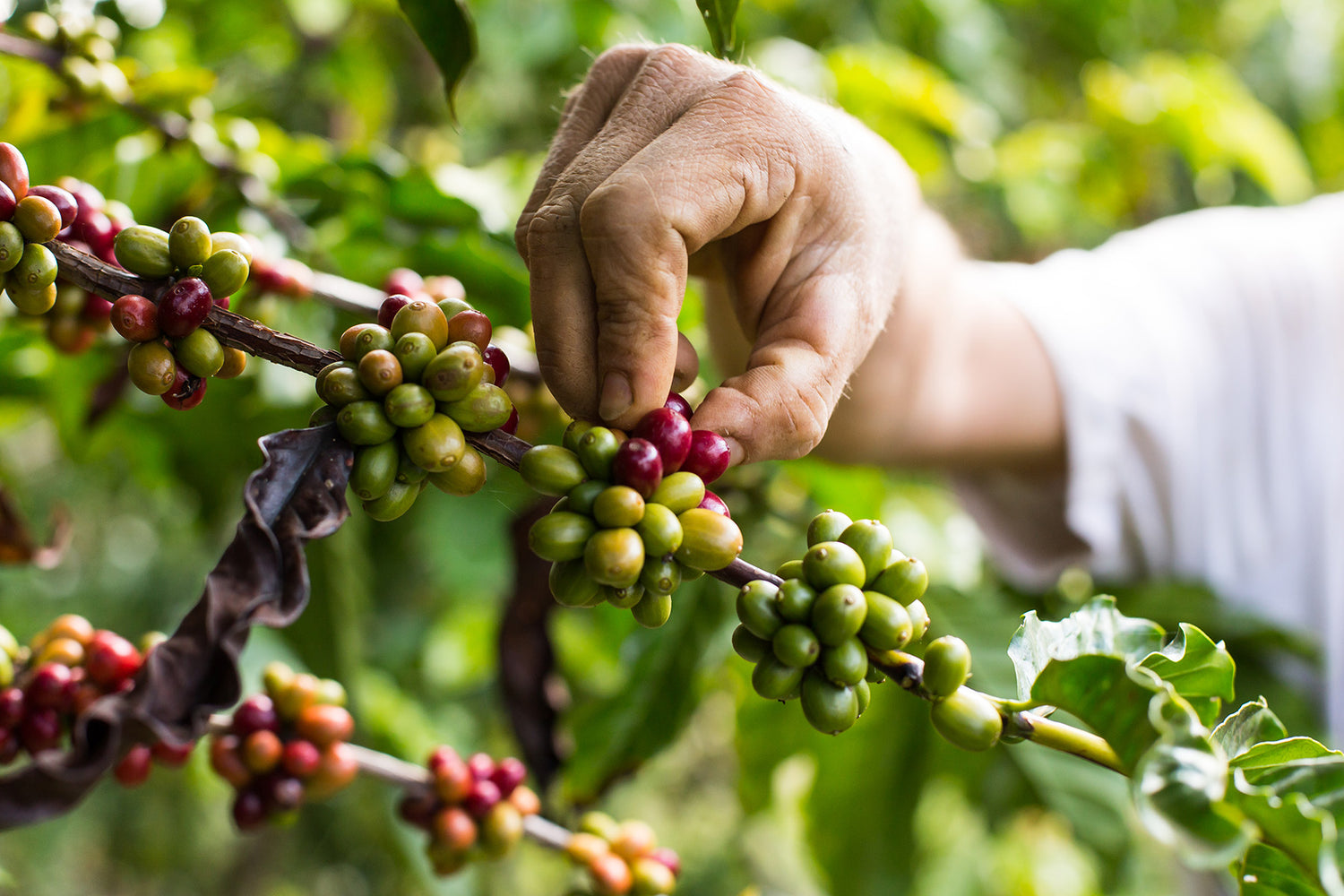
Direct Trade is not a certified system, but rather an approach in which roasters work directly with coffee farmers – without intermediaries or large certifiers. It is a partnership between the roaster and the coffee farmers. You get to know each other, visit each other, and work together to make the coffee better, thus achieving higher prices. Direct Trade can enable individually negotiated prices and long-term relationships. How much of that reaches the producer and what economic impact is created depends on the respective supply chain. Also, no one needs to worry about not being able to feed their family. We have been working with many partner producers for more than a decade.
Features of Direct Trade
- Direct relationships between the roastery and producers
- Pricing independent of the world market
- High quality requirements (often specialty coffee)
- Focus on long-term partnerships
Advantages
- Higher price for the farmers possible
- Transparency through personal and long-term relationships
- Focus on quality
Challenges
- No uniform standards – every roaster defines Direct Trade differently
- Trust is central, control is difficult
- No official seal, therefore risk of greenwashing
Direct Trade also unfortunately carries risks
Even though there are rarely malicious intentions in direct trade (everyone just wants the best), negative situations can still occur. For example, a harvest may not deliver the promised quality (coffee is a natural product and is subject to fluctuations). The buyer could then either push for a lower price or refuse acceptance. For the producer, this means they have to look for other distribution channels to avoid loss of income. Unfortunately, direct trade is sometimes also used as a marketing buzzword without companies actually conducting direct trade.
Other seals for fair or sustainable coffee
In addition to Fairtrade, there are other certification and trading systems with different social and/or ecological focuses. Direct Trade is not a uniformly certified standard.
Rainforest Alliance

- Combines ecological, social, and economic sustainability
- Farmers must comply with environmental standards, labor and social standards, such as: not allowing child labor
- Focus on biodiversity and climate protection
UTZ Certified (part of Rainforest Alliance since 2018)
- Emphasizes traceability, better farming methods, and social standards
- Goal: Professionalization of agriculture
Organic/Eco seals (e.g., EU Organic, USDA Organic)
- Not directly "fair", but: special requirements for fertilization, pest control, and genetic engineering
GEPA / WeltPartner
- German Fair Trade pioneer. Although it does not award an independent seal, it sets strict standards of its own
- Supports long-term trading relationships, education projects, and fair prices
SPP (Símbolo de Pequeños Productores)
- Seal founded by smallholder cooperatives themselves
- Only for organizations of smallholder farmers
- Very strict fairness criteria
These seals pursue different focuses – from social aspects to transparency to environmental protection, and can thus complement each other in individual areas.
Comparison: Direct Trade vs. Fair Trade
| CRITERION | FAIR TRADE | DIRECT TRADE |
| Certification | Yes (official seals, e.g., Fairtrade) | No (individually organized) |
| Minimum price | Yes (guaranteed base price) | No, prices freely and individually negotiable |
| Transparency | Formal through standards | Personal through direct relationships |
| Participation | Cooperatives with access to certification | Single-owner farms, cooperatives, smallholder farmers, etc. |
| Quality focus | Secondary | Primary (specialty coffee) |
| Social projects | Part of the premium | Optional, depending on the roaster (with us, e.g., Coffee School Project) |

So, which is "better"?
There is no blanket better. Both models have their place and their justification:
- Fair Trade is ideal for structurally weak regions where smallholder farmers need help without direct market access.
- Direct Trade works particularly well with high coffee quality when roasters and farmers cooperate in the long term. However, it is also suitable for structurally weak regions where smallholder farmers can hardly afford certification.
Tip for consumers: Look for transparent information from the roaster. Good providers explain where the coffee comes from, how it was paid for – with or without a seal.
Conclusion
Direct Trade and Fair Trade are two ways to make the global coffee trade fairer. Anyone who wants to drink sustainable coffee should look beyond the label: transparency, origin, and fair treatment of producers are more important than the label alone. The combination of both approaches – i.e., certified security with direct trade – could be the best way in the long term. We personally see direct trade as the only right way, because certifications still cost coffee producers far too much, which further reduces their (unfortunately often already small) profit through the higher expenses.